
Navigating the River of Time


The Current That Carries Us

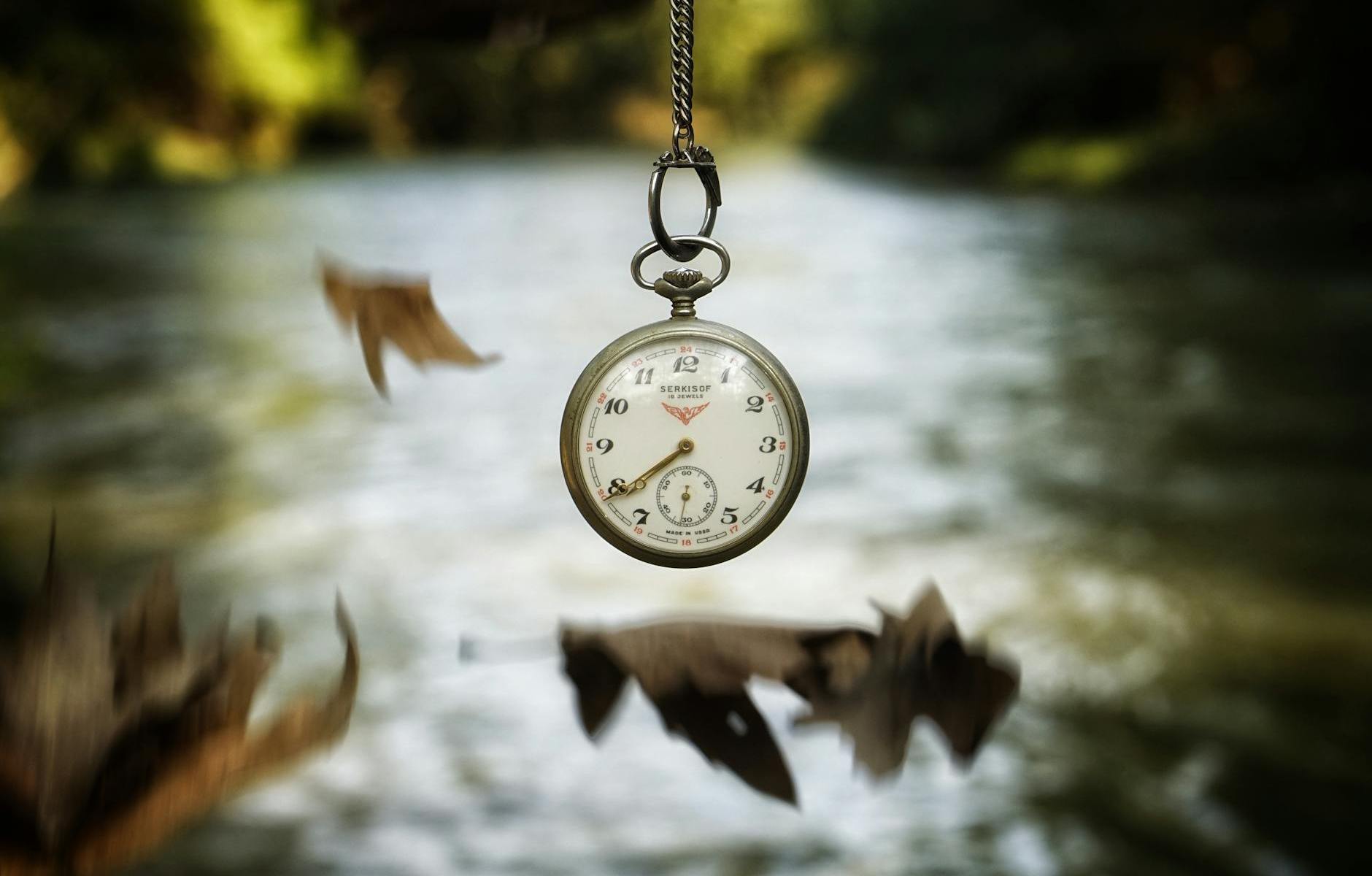
There are moments when life feels like a small boat swept along a roaring stream. The present dissolves into the past almost as soon as it arrives, and the future rushes past before we can take it in. Glancing at the shoreline only reveals whatโ€™s already behind us, while what lies ahead slips away too quickly to enjoy. Moving ever forward, we learn that the only place we truly live is right here, right now.


Learning to Steer

At first, I found myself looking backward so long that the treasures of today went unnoticed. Other times, I gazed too far ahead, only to have the current tug me off course. Over time, I discovered the power of keeping my hand firmly on the rudderโ€”balancing awareness of the past and plans for the future without losing sight of the present.


Balancing Past and Future

  • Honor lessons from whatโ€™s passed, but donโ€™t camp on old shores.
  • Plan for whatโ€™s coming, yet stay adaptable when the current shifts.
  • Treat memories as guides, not anchors, and ambitions as compasses, not burdens.

Hands on the Rudder: Practices for Presence

  1. Pause each morning to set an intention for todayโ€™s journey.
  2. Use brief check-ins throughout the dayโ€”three conscious breaths, a moment of gratitude.
  3. Journal one thing you learned yesterday and one thing you hope for tomorrow.

These simple acts help you ride the flow without capsizing in regrets or anxieties.


Embracing the Voyage Ahead

We are all time travelers, carried forward at a steady pace. By steering with intention, honoring where weโ€™ve been, and trusting our capacity to adapt, we make each day meaningful. The future will become what we build today, and the past remains a valuable mapโ€”both vital, but neither able to command our present.


Further Reflections

  • Consider what habits quietly steer your lifeโ€”are they guiding you toward calm waters or turbulent rapids?
  • Experiment with daily rituals that root you in the moment: mindful walking, short meditations, creative breaks.
  • Share your discoveries: how does slowing down change what you notice in your own stream of time?

Fear and Aspiration: The Dual Forces Shaping Our Destiny


Deep within the recesses of our being lies a wellspring of strength, yearning to rise and shape our existence, yet often stifled by the formidable barrier of fear. This fear manifests in various forms: perhaps it is the fear of succeeding and stepping into a new identity, or the fear of inadequacy and failing to transform our lives into something admirable and worthy of pride. The quintessential question we must confront is whether there is truly anything to fear in allowing this latent strength to assume its rightful place in our lives.

We are not solitary in grappling with these fears; many individuals are shackled by apprehensions that prevent them from realizing their full potential. A quote from Frank Herbert’s “Dune” often resonates with me during these moments of trepidation: “Fear is the mind-killer.” This profound statement encapsulates how fear can paralyze our rational thinking and hinder our capacity to shape our destiny.

Fear operates as a pervasive force that impedes our self-improvement, deterring us from venturing beyond the confines of our comfort zones. While the familiar and the safe offer a sense of solace, they can also become prisons that prevent us from achieving our aspirations. Like many others, I aspire to secure a fulfilling job and cultivate a loving family. Yet, like so many, I confront my own vulnerabilities and the fear of failure.

The struggle can be likened to a perpetual tug of war between our fears and our aspirations. The pivotal decision lies in determining which force we wish to empower. For myself, the preference is clear: I choose to confront my fears, recognizing that only by doing so can I unlock my potential and allow my life to flourish as it is meant to.

It is imperative to understand that the battle against fear is a shared human experience. We all harbor dreams and hopes, tempered by doubts and insecurities. Embracing this universal truth can foster a sense of solidarity and provide the courage needed to face our personal challenges.

As we navigate this journey, we must remember the wisdom encapsulated in the thought of the day: “To learn from one’s past is wise, but to dwell in the past is folly.” This philosophy reminds us of the importance of moving forward, armed with the lessons of our experiences, yet unencumbered by the weight of past fears. By doing so, we can cultivate a life enriched by self-compassion, resilience, and the fulfillment of our deepest potentials.

The Human Mosaic: Navigating Mistakes with Compassion


In the grand tapestry of existence, we find ourselves anchored in the present, yet perpetually tethered to the echoes of our past. The choices we’ve made, the souls we’ve intertwined with, leave indelible imprints upon our hearts. The lessons learned from our missteps carve deep furrows within our souls, while the loves we’ve lost reverberate through the chambers of our hearts. These remnants of our past linger not merely as specters to haunt us, but as sentinels, guiding us away from the pitfalls of our yesterdays.

It is in the nature of these memories to sometimes masquerade as harsh reminders, seeming to punish us for our prior transgressions. Yet, as we embark on the journey of self-forgiveness, their punitive grip loosens. Forgiving oneself is an arduous undertaking, more daunting than forgiving others. It is a path fraught with introspection and vulnerability.

For me, the act of extending compassion towards others comes with a certain ease. However, when it comes to myself, the act of forgiveness becomes a Herculean task. But in time, I learn to absolve myself for the errors committed, recognizing that withholding forgiveness would not only inflict suffering upon my own soul but also cast shadows upon those who share my journey. The fairness we owe to others must also be extended to ourselves.

Self-forgiveness is not an impossible feat; it is a crucial step towards healing and growth. It requires us to remember that the human experience is replete with imperfection. Each of us is a mosaic of triumphs and failings, and it is this very mosaic that makes us exquisitely human. In embracing our humanity, we find the strength to forgive, to heal, and to move forward, carrying the wisdom of our past with us, but not its burdens.

Thus, let us tread gently on the path of self-forgiveness, with the awareness that we are not solitary in our mistakes, and that to err is quintessentially human. The journey towards self-compassion is a testament to the resilience of the human spirit, a pilgrimage towards the profound understanding of our own worth.

Unity in Diversity: Valuing Age and Experience


In contemporary society, there exists a perception among the younger generation that the elderly are dispensable and lack significance. This stands in contrast to historical norms, where elders were revered for their wisdom and sought after for guidance, receiving support from the community. Itโ€™s essential to recognize that todayโ€™s older generation once occupied the role of youth and actively contributed to shaping our modern world. They played a pivotal role in the development and manufacturing of the electronic devices that many young people now appreciate.

Many of the Elderly of today were champions of civil rights, visionaries, and grassroots activists fought for the freedoms and rights enjoyed by people today. Their unwavering dedication and sacrifice significantly contributed to creating a better world. Their legacy paved the way for those who continue to champion equality and human dignity.

โ€œDespite their tireless efforts, some refer to them as โ€˜boomersโ€™ and view them as an additional burden on our government and a segment of todayโ€™s younger generation. However, itโ€™s essential to recognize that they still have much to contribute. Their wealth of wisdom, acquired through years of experience, provides valuable insights into the past and upholds values that appear scarce in our current era.

Ageism is a pervasive issue that unfairly diminishes individuals based on their age, whether they are elders or children. Regardless of their life stage, everyone deserves equal respect, just as those in their prime working years do. Life itself is precious and should be cherished by all of us. Basic respect is a fundamental right for every human being. Unfortunately, as a species, we still have progress to make in terms of respecting life and valuing each individual. Often, we find ourselves entangled in tribalism, an โ€˜us vs. themโ€™ mentality, and separatism. However, there is hope that one day we will recognize our shared humanity, transcending differences in beliefs to unite and strengthen our collective race.

In our journey through life, let us recognize that age should never be a barrier to respect. Whether young or old, each person contributes to the rich tapestry of human experience. As we navigate our existence, letโ€™s embrace unity over division, understanding over prejudice, and compassion over judgment. Together, we can build a world where every individualโ€™s worth is celebrated, regardless of their place on lifeโ€™s timeline.

Embracing Authenticity: The Path to Self-Discovery


For much of my life, I found myself unduly influenced by the perceptions of others, as well as those I presumed they held about me. This resulted in a continuous cycle of attempting to gain approval and adopting a persona contrary to my true self, all in pursuit of social acceptance and popularity. Regrettably, this led to many years spent neglecting my authentic identity and forsaking the individual I had the potential and obligation to become. Ultimately, I have come to realize that the only judgment that truly matters is my own, especially concerning my personal development and self-assessment.

In retrospect, I recognize that an excessive amount of time has been expended in regret over my actions and inactions, primarily due to an overarching concern for the opinions and expectations of others. Such a lifestyle has proven to be counterproductive, giving rise to numerous challenges related to oneโ€™s self-concept, including diminished self-esteem and an unhealthy emotional reliance on the validation of others. It is imperative to embrace oneโ€™s true self, pursue personal passions and principles, and lead a life that aligns with oneโ€™s desired self-image, ultimately cultivating a sense of self-love and pride.

It is a reassuring truth that the opportunity to cultivate self-love and embrace oneโ€™s true nature is not bound by time. Similarly, it is always possible to pursue oneโ€™s aspirations and evolve into the person one aspires to be. This journey begins with the release of apprehensions concerning the perceptions of others and fostering confidence in oneself. The most challenging aspect lies in introspection and the discovery of oneโ€™s authentic identityโ€”a process that may grow more intricate with age. Nonetheless, this endeavor is far from unattainable; it merely requires dedication and a commitment to personal growth over time.

In conclusion, the journey towards self-acceptance and personal growth is a continuous process that requires conscious effort and dedication. It involves recognizing and releasing the constraints of external validation, while fostering a deep sense of self-worth and confidence. As one embarks on this path, it is essential to utilize resources that offer guidance and support.

For those seeking to enhance their professional development, resources such as Stanford Onlineโ€™s guide on navigating professional growth1Harvard Business School Onlineโ€™s insights on achieving professional development goals2, and comprehensive personal development tools from MindGoals.org3 can be invaluable. Additionally, exploring self-acceptance exercises and activities from PositivePsychology.com4 and embracing self-awareness through Aaron Hallโ€™s insights5 can significantly contribute to oneโ€™s personal evolution.

Embracing oneself fully, with all the strengths and imperfections, is not only liberating but also empowering. It allows for a life lived with authenticity and purpose. Remember, the pursuit of self-discovery and self-improvement is not a destination but a lifelong voyage, one that is as rewarding as it is transformative.