The Gaza Strip: A Humanitarian Crisis and the Role of Superpowers
The Gaza Strip, a 365-square-kilometer region along the Mediterranean Sea, is home to over 2.3 million Palestinians. The ongoing conflict and humanitarian crisis in Gaza have created a dire situation, with widespread destruction, displacement, and a severe lack of basic necessities. The international community, particularly superpowers, has a crucial role to play in providing aid and support to those in need.
The Current Situation in Gaza
The Gaza Strip has been under a relentless siege, with Israeli forces controlling the borders to the north and east, and Egypt controlling the border to the south. The conflict, which began almost a year ago following Hamas-led attacks on Israel, has resulted in widespread destruction, a decimated healthcare system, and a severe lack of basic necessities such as food, water, and medicine.
The situation is particularly dire in northern Gaza, where Israeli military operations have intensified. Hospitals are on the brink of collapse, with a lack of life-saving medical supplies, fuel, and food. The United Nations has reported that aid entering Gaza is at its lowest level in months, with critical lifelines in the territory’s north being cut off. More than 400,000 people in the north are under increasing pressure to move south, facing insecurity and a lack of essential supplies.
The Role of Superpowers
Superpowers, such as the United States, China, and Russia, have a significant role to play in addressing the humanitarian crisis in Gaza. The Biden administration has recently put Israel on notice, warning that it could risk losing access to U.S. weapons unless it allows more humanitarian aid to flow to Palestinians in Gaza. This ultimatum highlights the urgency and seriousness of the situation and the need for immediate action.
China and Russia also have a part to play. Both nations can use their influence to advocate for peace and humanitarian aid, leveraging their positions within the United Nations and other international organizations. China, with its Belt and Road Initiative, has the potential to provide infrastructure support and development aid. Russia, with its historical involvement in the region, can offer diplomatic channels and resources to facilitate humanitarian efforts.
The Need for Sustained Efforts
The humanitarian crisis in Gaza is not a short-term issue; it requires sustained efforts and long-term solutions. The international community must continue to monitor the situation closely and provide ongoing support to those affected. This includes not only immediate aid but also efforts to rebuild infrastructure, restore healthcare systems, and ensure access to education and other essential services.
Conclusion
The situation in the Gaza Strip is a humanitarian crisis that demands immediate and sustained action from the international community. Superpowers, including the United States, China, and Russia, have a crucial role to play in providing aid and support to those in need. By working together and leveraging their influence, they can help alleviate the suffering of the people of Gaza and work towards a more stable and peaceful future.
It is disheartening to observe the pervasive divisiveness within our society, a manifestation of the antiquated ‘us versus them’ mindset. Those wielding power exploit innate human tendencies, such as the need for an adversary and the longing to affiliate with a cause, to secure acceptance and a sense of belonging within societal constructs. This manipulation is further exacerbated as the influential stoke public fears, thereby exerting control in a similar fashion. This cycle, regrettably, continues to perpetuate division and discord.
The incessant influx of information, particularly from platforms such as social media and purported news outlets, coupled with the propagation of conspiracy theories by influential figures, results in a significant portion of the populace becoming disoriented and oblivious to their surroundings. This phenomenon is a contemporary application of the ‘divide and conquer’ strategy, supplemented by a barrage of distractions designed to foster confusion and facilitate manipulation. Regrettably, this tactic often succeeds in misleading the public.
While the allure of social media and the intrigue of conspiracy theories can be captivating, it is crucial to occasionally disconnect from these sources to recalibrate one’s perspective and enhance awareness of the world. This involves consciously disengaging from televisions, computers, smartphones, and other electronic devices. Engaging in outdoor activities such as camping, fishing, or hiking, or pursuing spiritual paths can provide a much-needed respite. Practices such as meditation, prayer, and the study of religious scriptures aligned with one’s faith can contribute to mental tranquility and facilitate a return to one’s center. This balanced approach can help individuals navigate the complexities of the modern world with a clearer and more focused mind.
Above all, it is imperative to exercise independent thought, to step back and critically evaluate matters from one’s unique perspective. Rather than conforming to the majority’s mindset, one should cultivate and adhere to a personal cognitive framework. This individualistic approach to thinking not only fosters intellectual growth but also promotes authenticity and self-reliance.
In my analysis, there exists a notable prevalence of individuals who actively contribute to chaos, discord, division, and fear, rather than those who advocate for peace, joy, and compassion within our global community. Many seem preoccupied with passing judgment on others and seeking adversaries to harbor animosity towards, often overlooking the inherent beauty in our surroundings and the needs of the less fortunate.
Given the transient and precious nature of life, our collective focus should be directed toward cultivating joy in both our personal lives and the lives of others. It is incumbent upon us to seek out and implement solutions to pressing global challenges, including economic disparity, homelessness, and hunger. By doing so, we contribute to a more compassionate and equitable world.
Unfortunately, a significant proportion of individuals in positions of authority have led lives of privilege, with only a select few having experienced the rigors of demanding jobs for minimal compensation while striving to support their families. Regrettably, those in power often find themselves disconnected from the everyday realities faced by the majority, owing to the substantial wealth and influence they wield.
As we reflect on this disparity, it becomes crucial to advocate for policies and initiatives that bridge the gap between the privileged and the marginalized. Empathy and understanding must guide decision-making, ensuring that the needs of all citizens are addressed. By fostering a more inclusive dialogue and actively seeking solutions, we can create a society that values compassion, equity, and shared prosperity.
Moreover, it is incumbent upon those in positions of influence to actively engage with the challenges faced by ordinary people. This involves stepping out of their comfort zones, listening to diverse perspectives, and acknowledging the systemic issues that perpetuate inequality. By doing so, they can contribute to meaningful change and pave the way for a more just and compassionate world.
In summary, let us recognize our collective responsibility to uplift one another, regardless of our backgrounds or positions. By championing empathy, advocating for justice, and promoting policies that prioritize the well-being of all, we can build a brighter future for generations to come.
Throughout my existence, I have witnessed the tendency to adopt a subjective viewpoint and neglect the broader picture of the reality surrounding me. To prioritize my own interests and disregard the emotions, struggles, and impacts of others. This phenomenon is prevalent among human beings, driven by the instincts of self-preservation and self-interest. Even the most modest and empathetic individuals I have encountered succumb to this mentality at times.
Most people are not entirely narcissistic or egocentric, but they do experience moments when that aspect of them emerges. At some point in our lives, we all lost connection with the collective or familial spirit and embraced the individualistic mode of thinking. I acknowledge the necessity of a minimal degree of that mode, but our dominant mindset should be oriented towards serving the family and community. We require the distinctiveness of separate identity, but we also benefit from the rewarding experience of belonging to the whole.
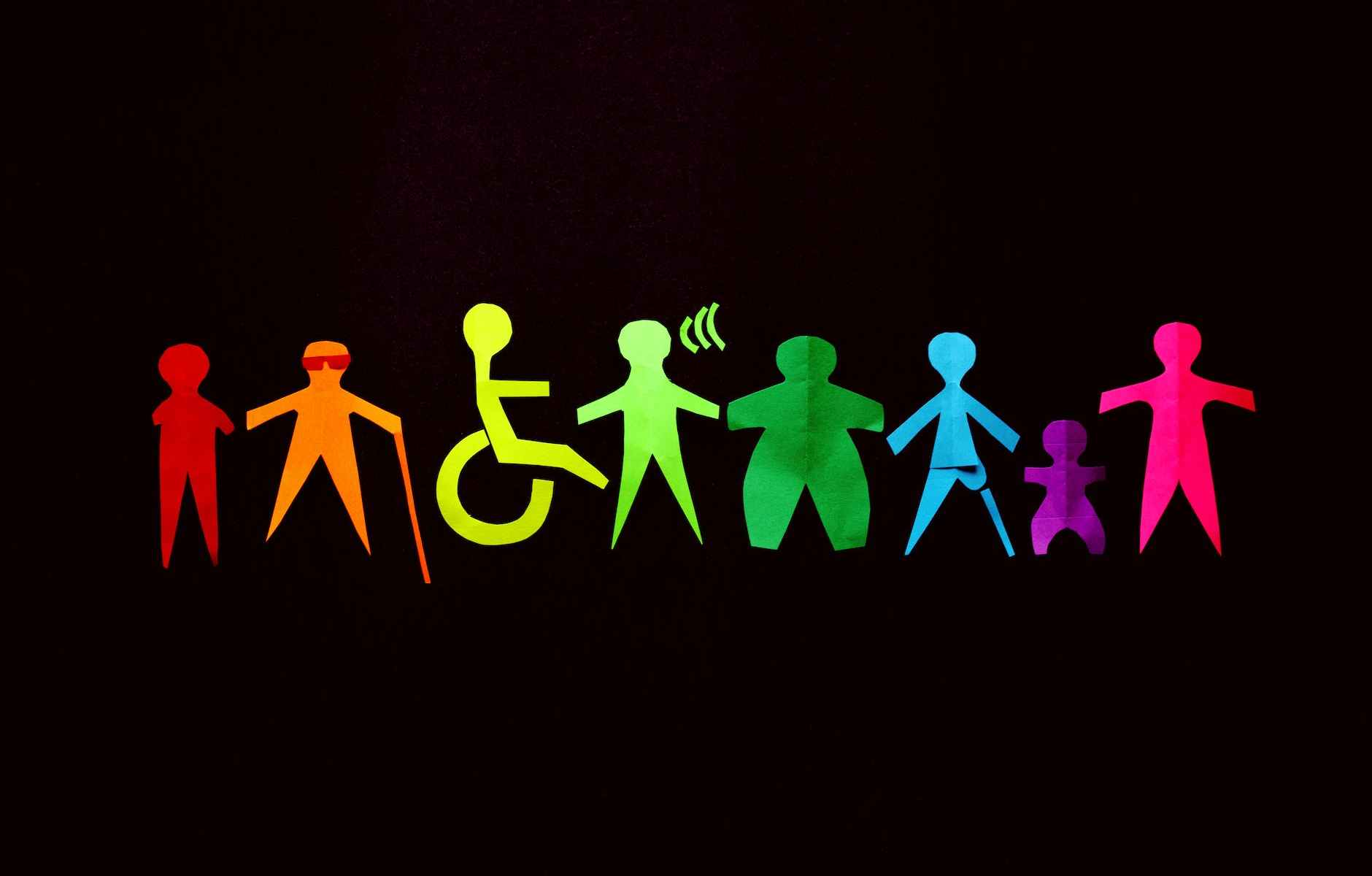
The diversity within our species is a gift we often perceive as a curse; we fail to accept as a community anything that deviates from our beliefs or experiences. This is one of the most formidable challenges we face in contemporary times. When will we overcome the elitism, separatism, bigotry, and vindictiveness of our minds and hearts? When will we realize we need the differences and diversity to survive and flourish, when will we recognize we need each other to make this world function?
The fundamental reality is that we are all essentially alike, the majority of us aspire to a better future for ourselves and our offspring. Of course, there are religious and cultural differences as well, but does that entail that you must annihilate or subjugate that which is dissimilar from your own? We can all coexist and accept the diverse beliefs and opinions among us all if we desired to. I am uncertain if it is pride, fear or simply lack of empathy that prevents humanity from uniting and learning to be tolerant of each other.
Regardless of the reason, the fact persists that we cannot transform the world if we do not transform ourselves first. It is one of those things that originates from you and propagates outward as time progresses. The choices you make, the words and actions you opt to say or do are what characterize you in this world. It is what molds your world and affects those around you. So be conscious of your actions and words, have self-respect and respect for all living beings. Have compassion for others as you may one day require it in return. Life is what you invest in it and create it.
In conclusion, we are all fundamentally similar, yet we often fail to appreciate and respect the diversity among us. In this text, I have suggested that diversity is not only a source of conflicts, but also a source of opportunities and benefits, both for individuals and for the society as a whole. I have supported this suggestion by providing examples from various domains, such as psychology, sociology, economics, and education.
To embrace diversity, we need to change ourselves first, and then influence others through our actions and words. We need to cultivate a culture of dialogue, cooperation, and inclusion, where everyone can participate and prosper from the collective wisdom and creativity of the human family. By doing so, we can improve our lives, enhance our potential, and solve the global challenges we face. Diversity is not a curse, but a gift. It is up to us to make the most of it.
We live in a divided world. We see so much conflict, violence, and hatred around us. We see people fighting over politics, religion, culture, and other issues. We see people who are different from us as enemies, not as fellow human beings. We see more reasons to separate ourselves from each other than to unite with each other.
This is not good for us. This is not good for our world. When we are divided, we are weaker. We are more vulnerable to the problems that affect us all, such as poverty, disease, climate change, and terrorism. We are also missing out on the beauty and diversity that each person and group can bring to our world.
How can we overcome this division and find common ground? How can we build bridges instead of walls? How can we foster peace instead of war?
There is no easy answer to these questions, but there are some steps we can take to start the process. Here are some tips on how to find common ground in a divided world:
Be curious and open-minded. One of the main reasons why we are divided is because we don’t understand each other. We don’t know what makes each other tick. We don’t know what scares, inspires, or challenges each other. We don’t know what values, beliefs, or experiences each other holds. To find common ground, we need to be curious and open-minded about each other. We need to ask questions, listen actively, and learn from each other. We need to be willing to challenge our own assumptions and biases and to respect different perspectives and opinions.
Be empathetic and compassionate. Another reason why we are divided is because we don’t care about each other. We don’t feel what each other feels. We don’t share each other’s joys and sorrows. We don’t recognize each other’s dignity and humanity. To find common ground, we need to be empathetic and compassionate towards each other. We need to put ourselves in each other’s shoes and try to understand how they feel and why they act the way they do. We need to acknowledge each other’s emotions and needs and offer support and kindness when needed.
Be respectful and civil. A third reason why we are divided is because we don’t respect each other. We don’t treat each other with courtesy and decency. We don’t honor each other’s rights and freedoms. We don’t appreciate each other’s contributions and achievements. To find common ground, we need to be respectful and civil towards each other. We need to use polite and constructive language and avoid insults and attacks. We need to follow the rules of fair and honest dialogue and avoid interruptions and distractions. We need to celebrate each other’s strengths and talents and acknowledge each other’s efforts and improvements.
Be cooperative and collaborative. A fourth reason why we are divided is because we don’t work with each other. We don’t cooperate on common goals and interests. We don’t collaborate on creative solutions and innovations. We don’t coordinate effective actions and strategies. To find common ground, we need to be cooperative and collaborative with each other. We need to identify areas of agreement and alignment and build on them. We need to generate ideas and options that benefit everyone involved and select the best ones together. We need to implement plans and projects that achieve positive outcomes for all stakeholders.
Finding common ground in a divided world is not impossible, but it requires effort and commitment from all of us. It requires us to be curious, empathetic, respectful, and cooperative with each other. It requires us to see beyond our differences and discover our similarities.
By finding common ground, we can create a more peaceful world for ourselves and for future generations.
We have one lifetime to make a difference in this world. Let’s make it count.
Today, I want to talk about three essential values that can transform our society and create a more compassionate and inclusive world. These values are inclusiveness, compassion, and tolerance, and they are the building blocks of a harmonious and thriving society.
Inclusiveness means embracing diversity and recognizing that each person has a unique and valuable contribution to make. We live in a world filled with different cultures, beliefs, and backgrounds, and when we embrace this diversity, we create a sense of belonging for all. When we are inclusive, we uplift each other and foster a spirit of unity.
Compassion is about empathy and kindness. We all experience hardships and difficulties in our lives, and when we show compassion to those who are struggling, we help them to feel supported and understood. Let us never forget that everyone is fighting their own battle, and a little kindness can make all the difference.
Tolerance is about respecting and accepting others, even when we disagree with them. We all have different opinions and beliefs, but when we approach each other with an open mind and heart, we can learn and grow from each other. Tolerance means recognizing that every person is valuable and deserving of respect, regardless of their differences.
In our fast-paced and often self-centered world, it can be easy to forget the importance of inclusiveness, compassion, and tolerance. But if we want to build a better world, we must embrace these values with all our hearts. Let us see the goodness in others and work towards creating a more harmonious and loving world.
May we all strive to live with an inclusive, compassionate, and tolerant spirit. Let us spread love, joy, and peace wherever we go.
In conclusion, the values of inclusiveness, compassion, and tolerance are essential for building a healthy and harmonious society. By embracing diversity, showing kindness and empathy towards others, and accepting and respecting others, we can create a more loving and accepting world. Let us remember the Bible verses that remind us of the importance of these values and strive to live with an inclusive, compassionate, and tolerant spirit. May we all work towards building a world where everyone feels valued and appreciated, and where love and kindness are the guiding principles.
Now that we have reflected on the importance of inclusiveness, compassion, and tolerance, it is time for us to take action. Let us commit ourselves to practicing these values in our daily lives and in our interactions with others.
Let us challenge ourselves to be more inclusive, to listen to those who have different perspectives, and to learn from them. Let us show compassion to those who are struggling and offer them support and encouragement. And let us practice tolerance by accepting and respecting others, even when we disagree with them.
We can also take action by advocating for these values in our communities and workplaces. We can encourage others to embrace diversity and create a culture of compassion and acceptance. By working together, we can make a difference and create a more inclusive and tolerant world for all.
So let us go forth from here with a renewed commitment to inclusiveness, compassion, and tolerance. Let us be the change we want to see in the world and work towards building a better future for ourselves and for future generations.
Here are a few Bible verses that relate to inclusiveness, compassion, and tolerance
Inclusiveness
Galatians 3:28 – “There is neither Jew nor Gentile, neither slave nor free, nor is there male and female, for you, are all one in Christ Jesus.”
Romans 10:12 – “For there is no difference between Jew and Gentile—the same Lord is Lord of all and richly blesses all who call on him.”
Compassion
Ephesians 4:32 – “Be kind and compassionate to one another, forgiving each other, just as in Christ God forgave you.”
Colossians 3:12 – “Therefore, as God’s chosen people, holy and dearly loved, clothe yourselves with compassion, kindness, humility, gentleness, and patience.”
Tolerance
Matthew 5:44 – “But I tell you, love your enemies and pray for those who persecute you.”
Romans 12:18 – “If it is possible, as far as it depends on you, live at peace with everyone.”
These verses remind us of the importance of treating others with love, respect, and kindness, regardless of their differences or beliefs. Let us hold these values close to our hearts as we strive to create a more inclusive, compassionate, and tolerant world.
Blessings to you all, and may your heart guide you through this life.
Children are exploited and forced to work jobs that are dangerous and should only be worked by adults. A sheriff and others spouting racist remarks and talking of murder or assassination of a reporter. Immigration problems and mass shootings are being sidelined for partisan politics and profit.
Ukraine, Russia, and China being a thorns in the side of the West, a battle of powers for what each side thinks is right. Countries raising the age for retirement which only adds to the suffering of the older population. Taxation is geared to make the working class shoulder the burden as the wealthy pay less.
Once again a security leak puts many in danger and all for an ego boost for a lost young soldier. We suffer severe weather, yet there is still disbelief in global warming and the science behind it. Book banning brings back fears of censorship and information control. The freedoms and rights of one group are attacked for the fears of another.
Compromises are rare due to the polarization of politics and the partisan agenda of both parties. Moderates of both parties are becoming rare and those who are moderate, keep quiet as the political divide grows. It is a time of rebirth it seems, and with birth comes great pain and disturbances.
The question is, Which way will humanity go? Will they seek out the path of inclusion and progress or one of status quo and stagnation? Will we move forward or will we move backward in our society? Can we come together for the betterment of all humanity or will we fall apart as a society?
The choice is in each individual’s hands and it is something we all have to take part in. Raise your voice to be heard and let your vision of what our future should look like be heard. Silence only allows others to make the choices that you will have to live with.
Be heard, be seen, and be open to compromise and new ideas my friends. Grow as an individual and contribute to the growth of the world and society we live in.
I was just sitting here thinking this morning about how politicalized news has become and how it has spread politicization into the everyday lives of Americans and others around the world. Too many people spend way too much time in front of the tv and computer screen binging on news, conspiracy theories, politically biased opinion shows, videos, and other types of media. When you constantly watch such things it tends to sway you towards the idealism and mindset of those putting out such media. Critical thinking, forming your own opinion, and remaining objective will become harder to achieve or maintain when you are constantly being bombarded with the opinions of others.
We need to take more time to process the information that we are receiving and also we should try and make sure that we get said information from a variety of sources, we also should try to remain open-minded and not limit ourselves to sources of information that tends to be the most aligned with our own beliefs and mindset. If you seek the truth, and absolute facts then do not just accept what you are given by others without verifying their sources and the information they provide. Also, you need to put aside all of your bias and personal feelings and look at the information you’re receiving objectively and fact-check everything.
Life is far more than sitting around and listening to/watching politically biased news and opinion pieces. There are far more important things in life to be concerned about. We should be enjoying our time with our family and friends. It does not matter if you are red or blue, you’re a human being and so is everyone else around you. Do not allow something as corrosive as politics to erode your relationship with others, just let your political differences become background noise and put both those around you and yourself at the front of your mind and enjoy the moment.
We need to find some way to bridge the gap between the political parties, close that divide and once again work together towards a better nation and world. If the divide continues to grow it will not bode well for either party. As it had been said, A divided house will fall and that said I feel that a nation divided will eventually fail. Personally, I think we need more moderates in politics, those near the center to help balance out the more extreme elements in both political parties. It takes all sorts of people, political ideas, and so on to make a successful society and nation. We all are in this together even if we all may have different ideas and views. Let us focus on the things that we have in common and build on that.
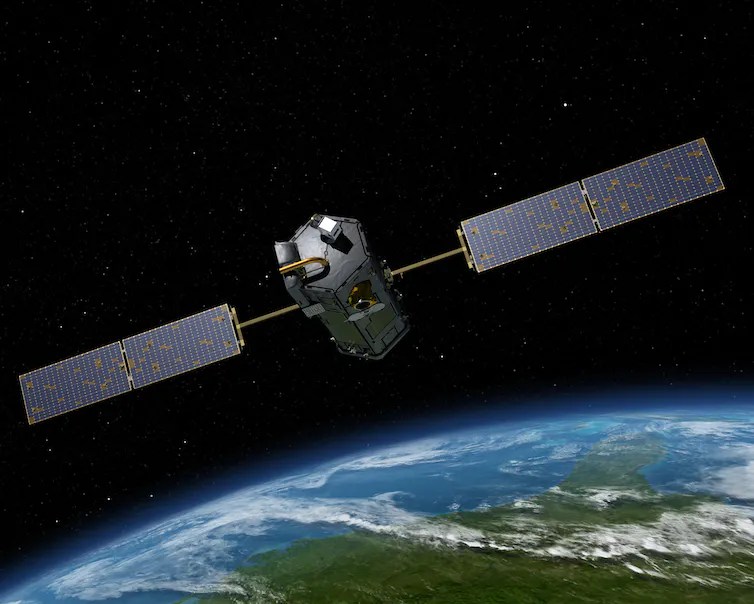
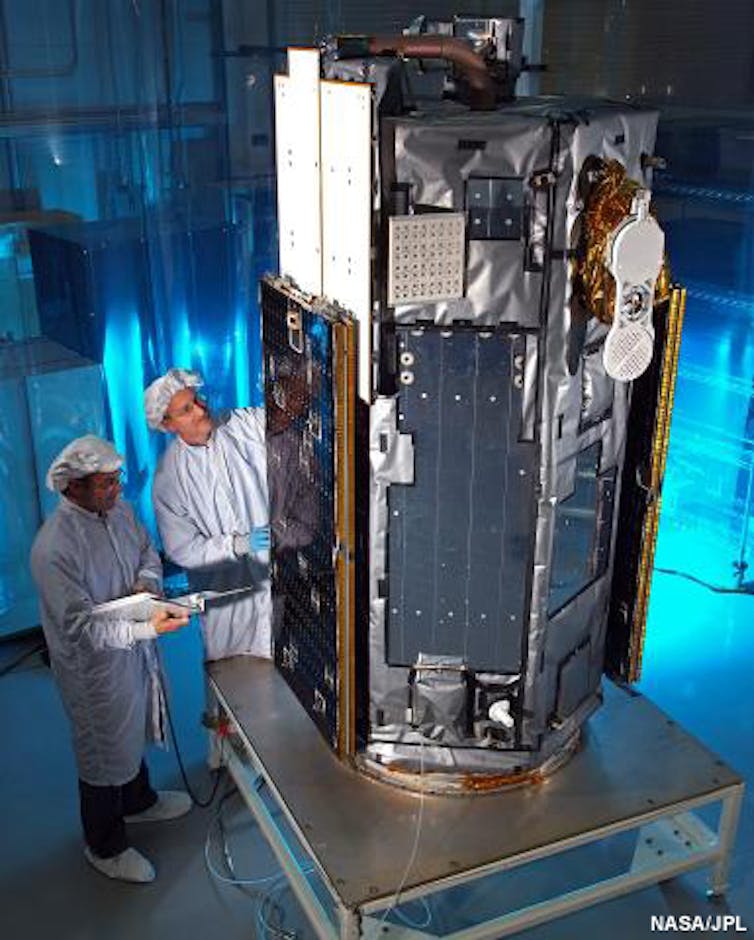
NASA’s Orbiting Carbon Observatory (OCO-2) satellite can make precise measurements of global atmospheric carbon dioxide (CO2) from space. (NASA/JPL-Caltech)
The central objective of the Paris Agreement is to limit Earth’s warming to well below 2 C above pre-industrial levels, but preferably 1.5 C.
This challenging task will require policies and tools to enable every sector of society to drastically reduce greenhouse gas (GHG) emissions to eventually reach net-zero.
Enacting the most effective and efficient strategies to reduce emissions starts with knowing in detail where, when and how much of these greenhouse gases we are emitting, followed by implementing emission reduction policies and tracking our progress.
Is it possible to track carbon dioxide (CO2) emissions and emission reductions from space? New research from my group shows that it is.
Why CO2 matters
CO2 is the primary greenhouse gas driving climate change. Burning fossil fuels for electricity generation, heating buildings, industry and transportation has elevated the CO2 in our atmosphere well beyond natural levels.
Currently, CO2 emission reporting is mainly done by accounting for the mass of fossil fuels purchased and used, then calculating the expected emissions — not actual atmospheric CO2 measurements. The finer details about exactly when and where the emissions occurred are often not available, but more transparent monitoring of CO2 emissions could help track the effectiveness of policies to reduce emissions.
Today GPS satellites help us to get around, meteorological satellites track weather systems and communication satellites relay TV, internet and telephone signals. It is time we use satellites to help tackle the biggest challenge that humanity has ever faced — climate change.
Satellites can observe the entire planet. Those that measure CO2 in the lower atmosphere near Earth’s surface (where CO2 emissions and CO2 uptake by plants happens) first began making measurements in 2002. Since then, they have been getting better and better at doing it, but there have been setbacks along the way.
About a decade of effort by NASA went into developing the Orbiting Carbon Observatory (OCO) satellite to make precise measurements of atmospheric CO2 across the Earth.
NASA developed the Orbiting Carbon Observatory satellite to make precise measurements of atmospheric CO2 across the Earth. (NASA/JPL), Author provided
In 2009, OCO was lost due to a launch problem. After sustained advocacy for a rebuild of this important climate mission, NASA secured new funding to launch the OCO-2 satellite in 2014 and OCO-3 to the International Space Station in 2019.
The OCO missions were designed to improve our understanding of vegetation’s CO2 absorption, also known as the land carbon sink. But what about fossil fuel CO2 emissions?
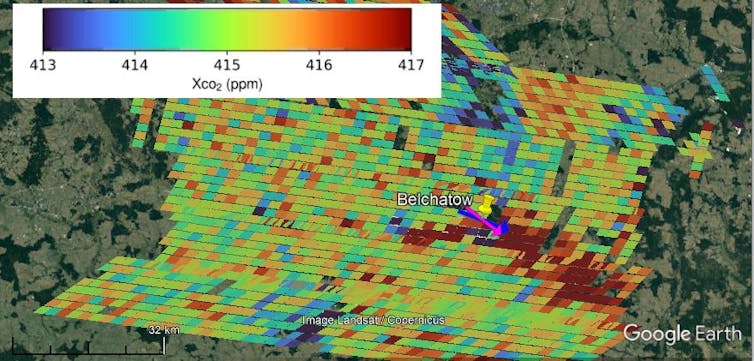
OCO-3 is very similar to OCO-2, but has an additional pointing mirror that enables it to better map CO2 around targets of interest like the Bełchatów Power Station in Poland, Europe’s largest fossil fuel burning power plant and CO2 source.
Bełchatów Power Station, Europe’s largest fossil fuel burning power plant. (Shutterstock)
With ten clear views of CO2 emission plumes from Bełchatów imaged by OCO-2 and OCO-3 from 2017-2022 analyzed in our new study, we were able to determine emissions on those days.
European power plants report hourly power generation but only annual CO2 emissions. Power generation fluctuates with electricity demand and generating unit shutdowns (for maintenance or decommissioning) and CO2 emissions are expected to exhibit proportional fluctuations.
We confirmed this using OCO-2 and OCO-3 in our recent paper, which showed that satellite observations can track changes in facility-level CO2 emissions. This means that satellites can be used to verify (or refute) reported CO2 emission reductions that result from climate change mitigation — like mandated efficiency improvements, carbon capture and storage technology, etc.
A plume of high CO2 resulting from coal burning is evident down wind from the Bełchatów Power Station in OCO-3 observations. (Ray Nassar), Author provided
Emissions monitoring for the Paris Agreement
Our approach can be applied to more power plants or modified for CO2 emissions from cities or countries with OCO-2 and OCO-3. We can also try integrating the satellite observations with CO2 monitoring from the ground or aircraft.
While we are already working on this, advances will only be incremental until the launch of the European Commission-funded Copernicus Anthropogenic CO2 Monitoring Mission or “CO2M”. CO2M is comprised of two satellites, aiming to launch in late 2025.
Hopefully, with new, more detailed and transparent tracking of human-caused greenhouse gas emissions to assess and guide us toward the most effective policies, society can achieve the emission reductions needed to reach net-zero in time.
Ray Nassar, Research Scientist at Environment and Climate Change Canada (ECCC), Adjunct Professor in Atmospheric Physics, University of Toronto
When Vladimir Putin launched a full-scale invasion of Ukraine by land, air and sea on Feb. 24, 2022, the images of war were conveyed to dismayed onlookers around the world. Far from the action, many of us became aware of the unprovoked aggression by reading online coverage or watching TV to see explosions and people running from danger and crowding into underground bunkers.
Half a year later, the violence continues. But for those who have not been directly affected by the events, this ongoing war and its casualties have been shifting to the periphery of many people’s attention.
This turning away makes sense.
Being attentive to realities like war is often painful, and people are not well-equipped to keep a sustained focus on ongoing or traumatic occurrences.
As the philosopher-psychologist William James asked, “Does not every sudden shock, appearance of a new object, or change in a sensation, create a real interruption?”
Ongoing tragic events, like the assault on Ukraine, can recede from people’s attention because many may feel overwhelmed, helpless or drawn to other urgent issues. This phenomenon is called “crisis fatigue.”
The McKinney Fire burned more than 60,000 acres in Northern California this summer, killing four people and destroying 90 residences. Drought conditions enabled the fire to spread quickly. AP Photo/Noah Berger, CC BY
Roots of crisis fatigue
Malevolent actors and authoritarians like Putin are aware of public fatigue and use it to their advantage. “War fatigue is kicking in,” the Estonian prime minister, Kaja Kallas, said. “Russia is playing on us getting tired. We must not fall into the trap.”
In a speech to marketing professionals in Cannes, France, the president of Ukraine, Volodymyr Zelenskyy, asked them to keep the world focused on his country’s plight. “I’ll be honest with you – the end of this war and its circumstances depend on the world’s attention …,” he said. “Don’t let the world switch to something else!”
Unfortunately, many of us have already changed the channel. The tragic has become banal.
I became interested in the phenomenon of fatigue as a result of my scholarly research into moral attentiveness. This idea was articulated by the 20th-century French philosopher and social activist Simone Weil.
Simone Weil, a French philosopher, joined the Durruti Column in 1936 during the Spanish Civil War. Her scholarly work of social justice focused on the oppressed and marginalized in society. Apic/Hulton Archives via Getty Images, CC BY
According to Weil, moral attention is the capacity to open ourselves up fully – intellectually, emotionally and even physically – to the realities that we encounter. She described such attention as vigilance, a suspension of our ego-driven frameworks and personal desires in favor of a Buddhist-like emptiness of mind. This mindset receives, raw and unfiltered, whatever is presented without avoidance or projection.
Not surprisingly, Weil found attention to be inseparable from compassion, or “suffering with” the other. There is no avoiding pain and anguish when one attends to the afflicted; hence, she wrote that “thought flies from affliction as promptly and irresistibly as an animal flies from death.”
The sensitivity involved in attending to crises can be a double-edged sword. On one hand, attention can put people in touch with the unvarnished lives of others so the afflicted are truly seen and heard. On the other, such openness can overwhelm many of us through vicarious trauma, as psychologists Lisa McCann and Laurie Pearlmanhave noted.
The difficulty of sustained focus on events like the war is due not only to the inherent fragility of moral attention, however. As cultural critics like Neil Postman, James Williams and Maggie Jackson have noted, the 24/7 news cycle is one of many pressures clamoring for our attention. Our smartphones and other technology with incessant communications – from trivial to apocalyptic – engineer environments to keep us perpetually distracted and disoriented.
Why audiences tune out
Aside from the threats to people’s attention posed by our distracting technologies and information overload, there is also the fact of crisis fatigue leading readers to consume less news.
This year, a Reuters Institute analysis showed that interest in news has decreased sharply across all markets, from 63% in 2017 to 51% in 2022, while a full 15% of Americans have disconnected from news coverage altogether.
According to the Reuters report, the reasons for this differ, in part, with political affiliation. Conservative voters tend to avoid the news because they deem it untrustworthy or biased, while liberal voters avoid news because of feelings of powerlessness and fatigue. Online news, with its perpetual drive to keep eyes trained on screens, is unwittingly undermining its own goals: to provide news and keep the public informed.
Taking a new tack
How might we recover a capacity for meaningful attention and responses amid incessant, disjointed and overwhelming news? Scholars have made a variety of recommendations, usually focused on reining in digital device usage. Beyond this, readers and journalists might consider the following:
Limiting the daily intake of news can help people become more attentive to particular issues of concern without feeling overwhelmed. Cultural theorist Yves Citton, in his book “The Ecology of Attention,” urges readers to “extract” themselves “from the hold of the alertness media regime.” According to him, the current media creates a state of “permanent alertness” through “crisis discourses, images of catastrophes, political scandals, and violent news items.” At the same time, reading long-form articles and essays can actually be a practice that helps with cultivating attentiveness.
Journalists can include more solutions-based stories that capture the possibility of change. Avenues for action can be offered to readers to counteract paralysis in the face of tragedy. Amanda Ripley, a former Time magazine journalist, notes that “stories that offer hope, agency, and dignity feel like breaking news right now, because we are so overwhelmed with the opposite.”
Weil, who was committed to the responsibility of moral attentiveness but did not romanticize tragedy, wrote, “Nothing is so beautiful and wonderful, nothing is so continually fresh and surprising, so full of sweet and perpetual ecstasy, as the good.”













 One Lifetime Blog
You must be logged in to post a comment.