

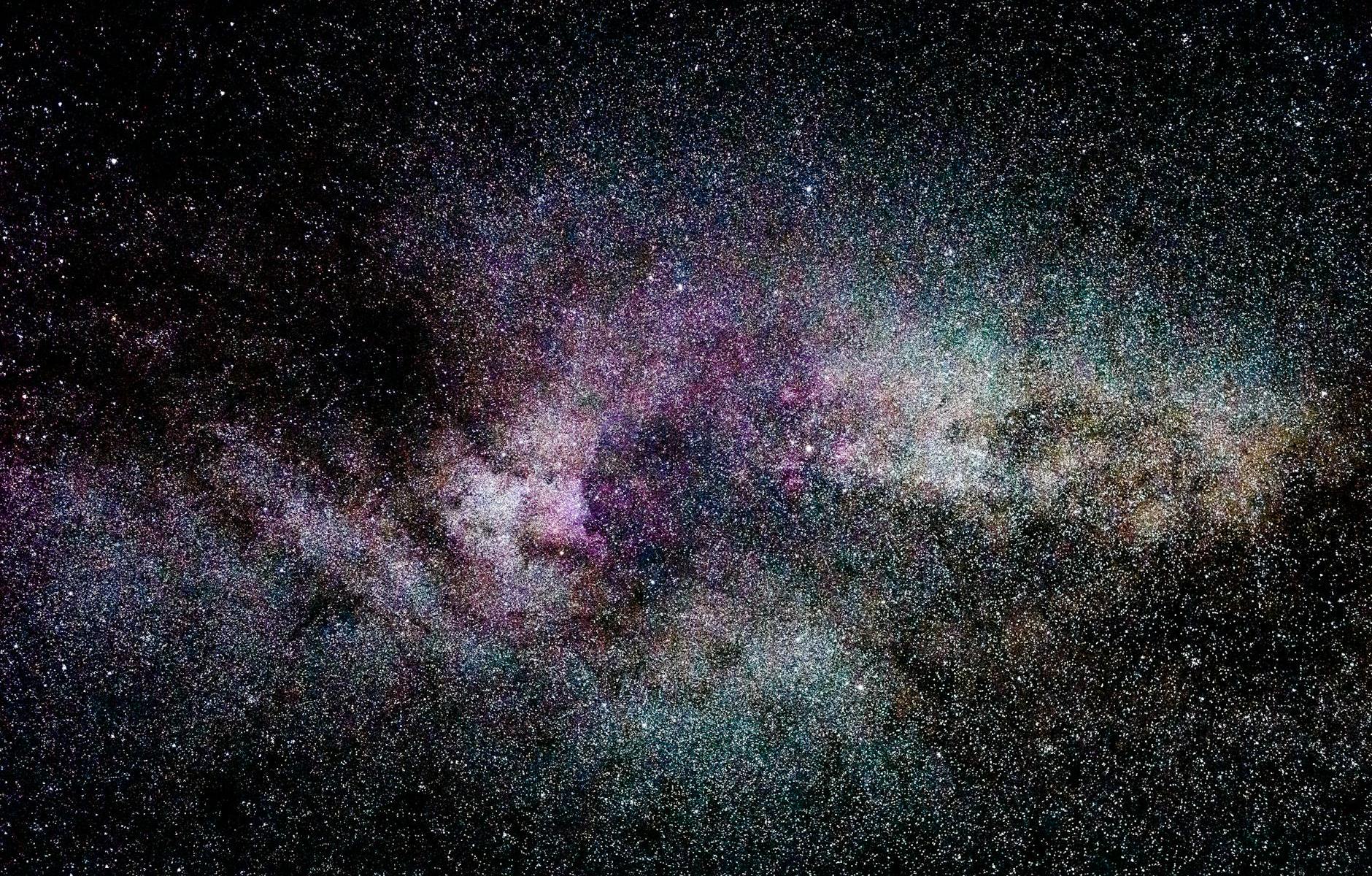
The cosmos is vast and filled with innumerable stars, many of which are orbited by planets. The question of whether life exists on these distant worlds has captivated humanity for centuries. Today, scientists are actively searching for signs of life on other planets, using a combination of space telescopes, rovers, and sophisticated instruments.
One of the primary methods of detecting life is by analyzing the atmospheres of exoplanets for biosignatures—chemical compounds that may indicate the presence of life. NASA’s James Webb Space Telescope, for instance, is designed to detect the composition of exoplanet atmospheres and could potentially capture signs of life light-years away1.
Within our solar system, missions like the Perseverance rover on Mars and the upcoming Europa Clipper mission to Jupiter’s icy moon aim to uncover whether conditions on these celestial bodies could support life. The discovery of subsurface oceans encased in ice on moons like Europa suggests that life could exist in environments vastly different from our own2.
Interdimensional Life: Beyond Science Fiction
The concept of interdimensional life takes us into the realm of theoretical physics, where the boundaries between science and science fiction blur. Physicists like Lisa Randall have proposed the existence of extra dimensions close to our own reality, which could be hidden due to their unique properties3.
String theory, a framework in particle physics, suggests that particles are not point-like dots but rather tiny vibrating strings. This theory requires the existence of more than the four dimensions we experience—length, width, depth, and time. It opens up the possibility of parallel dimensions where life forms, incomprehensible to our understanding, could exist4.
The Interplay of Science and Imagination
As we delve into the unknown, the line between what is scientifically plausible and what is speculative becomes increasingly thin. The search for extraterrestrial and interdimensional life challenges our understanding of life itself. It forces us to consider life as we know it and life as we don’t know it, potentially made of unfamiliar molecular combinations or based on solvents other than water1.
The journey to discover life beyond our planet and dimension is not just a scientific endeavor but also a philosophical one. It asks us to redefine our place in the universe and to expand our imagination to the furthest reaches of possibility.
In conclusion, the search for life on other planets and the exploration of interdimensional life are at the forefront of modern science. While we have yet to find definitive proof of either, the pursuit continues to inspire and challenge our understanding of the universe and our place within it. As we look to the stars and beyond, we remain hopeful that one day we may find that we are not alone.



 One Lifetime Blog