The pursuit of a long and healthy life is often linked to the state of one’s happiness, a notion supported by recent research that suggests maintaining a joyful disposition contributes significantly to overall health. This insight, while seemingly new, aligns with the well-established understanding that emotional well-being is integral to physical health. Historically, much attention has been given to the negative impacts of depression and stress, including their association with chronic illnesses. The latest approach, however, reframes this perspective in a more positive light, emphasizing the benefits of happiness.
I firmly support this optimistic angle. Achieving happiness appears to be a more attainable goal compared to the daunting task of avoiding stress and depression. This approach mirrors the modern dietary advice that promotes responsible eating over restrictive dieting. It is akin to favoring balanced consumption rather than engaging in practices that lead to malnutrition.
Adopting new, positive habits often proves easier than attempting to discard old, detrimental ones. The concept of replacing an adverse habit with a beneficial one is pragmatic, albeit challenging. There will inevitably be skeptics who view such ideas as overly simplistic. However, it is important to remember that dismissing new approaches without exploring their potential undermines the opportunity for positive change.
Thought of the day: One of the greatest obstacles to self-improvement is self-doubt. Overcoming this internal adversary is essential for personal growth and development. Recognizing that everyone makes mistakes and that imperfection is a fundamental aspect of the human experience can pave the way for self-forgiveness and resilience. Thus, embracing new ideas and approaches with an open mind is crucial in the journey towards self-betterment.
Music has been a part of human culture for thousands of years and has been shown to have numerous benefits for both mental and physical health. According to the National Center for Complementary and Integrative Health, music can help promote health and manage disease symptoms . Here are some ways in which music can be beneficial:
Boosts mood: Listening to music can help improve your mood and reduce symptoms of depression and anxiety. It can also help you relax and reduce stress levels .
Improves cognitive function: Music has been shown to improve cognitive function in older adults, including memory, attention, and executive function .
Reduces pain: Listening to music can help reduce pain and discomfort, especially during medical procedures such as surgery or dental work .
Enhances exercise performance: Listening to music while exercising can help improve endurance, increase motivation, and reduce fatigue .
Promotes social bonding: Music can help create a sense of social connectedness and promote feelings of empathy and compassion .
Improves sleep: Listening to calming music before bed can help improve sleep quality and reduce symptoms of insomnia .
Reduces symptoms of dementia: Music therapy has been shown to improve cognitive function and reduce symptoms of dementia in older adults .
Helps manage symptoms of Parkinson’s disease: Music therapy can help improve motor function and reduce symptoms of Parkinson’s disease .
Reduces symptoms of multiple sclerosis: Music-based interventions have been found to be beneficial for coordination, balance, and emotional status in people with multiple sclerosis .
Reduces symptoms of depression: Listening to music can help reduce symptoms of depression and improve energy levels. Research suggests that, for some people, music can be as effective as medication at relieving depression symptoms . Consider listening to music that you enjoy and that makes you feel good.
Improves immune function: Listening to music can help boost the immune system by increasing the production of antibodies and natural killer cells .
Reduces symptoms of anxiety: Listening to calming music can help reduce symptoms of anxiety and promote relaxation .
In conclusion, music can have a powerful impact on both mental and physical health. Whether you’re listening to music to improve your mood, reduce pain, or enhance exercise performance, there are many ways in which music can be beneficial. If you’re interested in exploring the benefits of music further, consider taking up an instrument or attending a music therapy session.
Mental health and high school-aged children have been a hot topic in the news lately. Some say that mental health issues have risen in recent years, while others think that we are just more aware and attentive to our children’s emotional and mental well-being. Either way, the study reveals that girls are twice as likely as boys to struggle with emotional and mental issues in high school.
When I think back to my teenage years, I remember that girls faced more body shaming than boys, and they had to deal with it from both genders, while boys mostly got it from other boys. This could be one of the reasons why female students have higher rates of emotional and mental health issues.
I also remember that bullying, body shaming, and social exclusion started as early as elementary school. So mental health issues could begin in elementary or middle school. School years can be very hard for some people to get through. If you don’t fit in with a certain look, clothes, personality, or economic status, you can be either rejected or ignored by your peers.
Teenagers face more emotional and mental challenges than ever before, partly because of the social media platforms that enable their peers to bully them in new ways. Some children lack empathy and think bullying is cool or fun, and they inflict a lot of harm on the mental health of the rest of the school-age population. Bullying seems to be a problem that has existed for as long as humans walked this earth. And it is something we need to address, especially in our kids.
Instead of judging a bully harshly, we should try to understand the root causes of their behavior. They might be struggling with mental health problems or a difficult family situation. We should intervene early and offer support to the children who bully others and their families. This way, we can prevent a lot of the harm that bullying causes to everyone involved.
Schools and communities should provide free mental health services. Parents and teachers should be trained to deal with mental health issues and bullying. We should end the stigma around mental health and raise awareness about its significance. This could help prevent future tragedies such as mass shootings and violent crimes caused by mental health problems.
Nothing matters more than our children and their future. We have a duty to do everything in our power to ensure they thrive physically and mentally. They are the future leaders and innovators of the world and we must equip them with the skills and help they need to succeed. We owe them nothing less than a healthy and happy life.
In conclusion, our children are our most valuable asset and we have a moral obligation to ensure their well-being. We cannot afford to ignore the physical and mental health challenges they face in this complex and uncertain world. We must take action and demand better policies and resources from our government to support them. We must also provide them with the love and care they need at home and in the community. Our children are the future and they deserve nothing less than our best efforts. Let’s make it happen.
Chinese healing is an old and wonderful way of healing that comes from China. It has been around for a long time and many people still use it today. Chinese healing believes that people are healthy when they have a good balance of two different kinds of energy in their bodies and in the world. One kind of energy is called yin and it is calm and cool. The other kind of energy is called yang and it is active and warm. Chinese healing also believes that people have another kind of energy called qi that moves inside their bodies. When Qi gets stuck or goes the wrong way, people can get sick. Chinese healing wants to stop or fix sickness by making the yin, yang, and qi work well together.
Chinese healing has different ways of helping people. Some of the ways are:
Acupuncture: A way of putting thin needles into some parts of the body to make qi move better and make yin and yang more balanced. Acupuncture can help with pain, swelling, blood flow, and other things in the body.
Tui Na: A way of rubbing and moving the muscles and bones to make qi and blood move better, make the body relax, and make stress go away. Tui Na can help with problems in the muscles and bones, stomach, lungs, and mind.
Nutrition Therapy: A way of eating good food to make the body strong and healthy, fight off sickness, and stop or fix diseases. Nutrition therapy thinks about what kind of person you are, where you live, what time of year it is, and what kind of sickness you have. It also thinks about what kind of food is good for you and what kind is bad for you. Nutrition therapy can help with yin and yang balance, qi and blood circulation, and organ function.
Herbal Medicine: A way of using natural things from plants, animals, or rocks to treat different sicknesses. Herbal medicine can be swallowed, put on the skin, or smelled. Herbal medicine can help with the immune system response, infection control, inflammation reduction, detoxification process, and organ function enhancement.
Chinese healing is a whole way of looking at health that cares about the body, mind, heart, and spirit. It is also a way of living well that tells people to do things like exercise practice, meditation techniques, stress management strategy, and environmental awareness cultivation. Chinese healing can be used by itself or with other kinds of medicine to make people feel better and happier.
In conclusion, Chinese healing is an old and wonderful way of healing that can help you with your health and happiness. It has different ways of helping you, such as acupuncture, tui na, nutrition therapy, and herbal medicine. It also cares about your whole self, not just your body. It also tells you how to live well and prevent sickness. Chinese healing can work by itself or with other kinds of medicine. I hope you learned something new and useful from this blog post. If you want to know more about Chinese healing, you can check out these websites:
Mindfulness is a simple yet transformative practice that can have significant benefits for both our physical and mental health. It involves being fully present in the moment and observing our thoughts and feelings without judgment. Although mindfulness has its roots in Buddhist meditation, it has evolved and found its way into various secular contexts and is now widely practiced in different settings, including hospitals, schools, and workplaces.
The benefits of mindfulness are numerous and well-documented. One of the most significant benefits is that it can reduce stress and anxiety. A study published in the Journal of the American Medical Association found that mindfulness-based stress reduction was effective in reducing symptoms of anxiety and depression in patients with generalized anxiety disorder. Another study published in the journal Psychiatry Research found that mindfulness-based stress reduction was effective in reducing stress and improving the quality of life in patients with chronic pain.
In addition to reducing stress and anxiety, mindfulness has been shown to lower blood pressure, improve sleep quality, and enhance overall well-being. It can also help manage chronic pain, reduce symptoms of depression, and improve cognitive function.
The benefits of mindfulness extend beyond physical health. It has been found to improve emotional regulation, increase empathy, and enhance social connections. It can also help us to be more resilient in the face of challenges and better able to cope with difficult emotions.
One of the best things about mindfulness is that it can be practiced anywhere and at any time. All you need is a quiet place to sit or lie down and a few minutes of your time. There are also many resources available to help you get started with mindfulness, including guided meditations, books, and apps.
If you’re interested in exploring mindfulness further, here are some useful links to get you started:
Headspace: This popular mindfulness app offers guided meditations and mindfulness exercises to help you reduce stress and improve your well-being.
Mindful: This website offers a wealth of resources on mindfulness, including guided meditations, articles, and videos.
The Mindfulness-Based Stress Reduction Program: Developed by Jon Kabat-Zinn, this eight-week program has been shown to be effective in reducing stress and improving overall well-being.
Insight Timer: This app offers a wide variety of guided meditations and mindfulness exercises, as well as a community of practitioners to connect with.
In conclusion, mindfulness is a powerful practice that can improve our physical and mental health in numerous ways. By being fully present in the moment and cultivating a more positive mindset, we can lead happier, healthier lives. With the abundance of resources available, anyone can start practicing mindfulness and enjoy its many benefits.
Meditation and Christianity may seem like two very different concepts, but in reality, they can complement each other quite nicely. As a Christian who practices meditation regularly, I can attest to the benefits that both practices have brought into my life. In this article, I would like to share my personal experience and understanding of how meditation and Christianity can coexist in a person’s spiritual journey.
Firstly, let’s define what we mean by meditation. Meditation is a practice that involves focusing your mind on a particular object, thought, or activity to achieve a mentally clear and emotionally calm state. It is not a religious practice, but rather a tool that can be used to enhance any spiritual or secular practice. In the context of Christianity, meditation can involve prayer, reading scripture, or simply sitting in silence and allowing yourself to be present in the moment.
One of the main benefits of meditation is that it can help you develop a deeper connection with God. By quieting your mind and focusing your attention on God, you can create a space for him to speak to you. This can be done through prayer or simply by sitting in silence and listening for His voice. When you meditate, you become more aware of God’s presence in your life, and you begin to see the world through his eyes.
Another benefit of meditation is that it can help you manage stress and anxiety. As a Christian, it’s easy to get caught up in the worries of daily life and forget to take time to be still and connect with God. Meditation allows you to let go of your worries and anxieties and focus on the present moment. By doing this, you can find peace and clarity in the midst of chaos.
Now, you may be wondering, how does meditation fit into the Christian faith? Isn’t it a practice that belongs to other religions, such as Buddhism or Hinduism? The answer is that meditation is not tied to any particular religion or belief system. It is simply a tool that can be used to enhance your spiritual practice, regardless of what that practice may be.
In fact, there are many examples of meditation in the Bible. For instance, in Psalm 46:10, we are told to “be still and know that I am God.” This verse encourages us to take time to be quiet and connect with God, which is essentially what meditation is all about. Similarly, in Mark 1:35, we are told that Jesus would often go to a quiet place to pray and connect with God. This is a perfect example of how meditation can be incorporated into a Christian practice.
In conclusion, meditation and Christianity can coexist in a beautiful and meaningful way. Meditation can help you deepen your connection with God, manage stress and anxiety, and find peace and clarity in the midst of chaos. It is not a practice that belongs to any particular religion or belief system, but rather a tool that can be used to enhance any spiritual or secular practice. If you’re interested in incorporating meditation into your spiritual journey, I encourage you to give it a try and see how it can transform your life.
Some Related Websites you may enjoy
Christian Meditation – This website offers resources, articles, and courses on Christian meditation. https://christianmeditation.com/
Contemplative Outreach – An organization dedicated to teaching contemplative practices, including Christian meditation. https://www.contemplativeoutreach.org/
The Center for Contemplative Mind in Society – A non-profit organization that promotes contemplative practices in various fields, including religion and spirituality. https://www.contemplativemind.org/
BibleGateway – An online Bible resource that includes various translations of the Bible and a search feature for specific verses related to meditation and mindfulness. https://www.biblegateway.com/
The Research Brief is a short take about interesting academic work.
The big idea
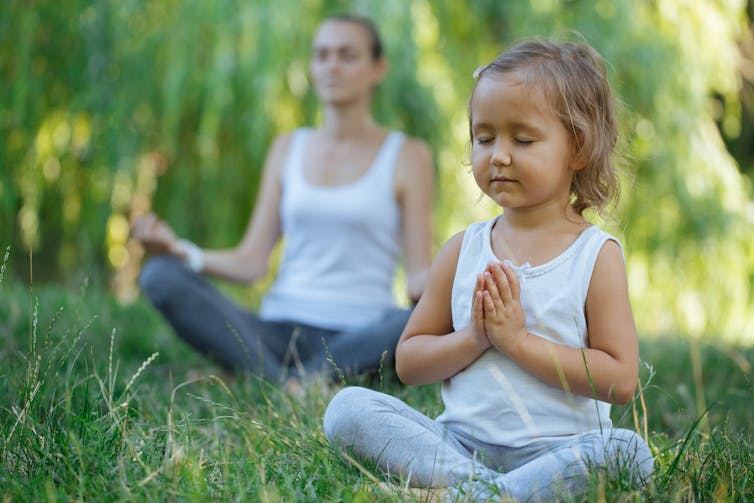
Children actively meditating experience lower activity in parts of the brain involved in rumination, mind-wandering and depression, our teamfound in the first brain-imaging study of young people under 18 years old. Over-activity in this collection of brain regions, known as the default mode network, is thought to be involved in the generation of negative self-directed thoughts – such as “I am such a failure” – that are prominent in mental disorders like depression.
In our study, we compared a simple form of distraction – counting backward from 10 – with two relatively simple forms of meditation: focused attention to the breath and mindful acceptance. Children in an MRI scanner had to use these techniques while watching distress-inducing video clips, such as a child receiving an injection.
We found that meditation techniques were more effective than distraction at quelling activity in that brain network. This reinforces research from our lab and others showing that meditation techniques and martial arts-based meditation programs are effective for reducing pain and stress in children with cancer or other chronic illnesses – and in their siblings – as well as in schoolchildren during the COVID-19 pandemic.
This study, led by medical student Aneesh Hehr, is important because meditation techniques such as focused attention on the breath or mindful acceptance are popular in school settings and are increasingly used to help children cope with stressful experiences. These might include exposures to trauma, medical treatments or even COVID-19-related stress. https://www.youtube.com/embed/SpjWb9teKSY?wmode=transparent&start=0 Here’s what happened at one elementary school that made meditation part of its curriculum.
Why it matters
Researchers know a lot about what is happening in the brain and body in adults while they meditate, but comparable data for children has been lacking. Understanding what is happening in children’s brains when they meditate is important because the developing brain is wired differently from the adult brain.
These findings are also important because caregivers and health care providers often use distraction methods like iPads or toys to help children cope with pain and distress, such as medical procedures. However, those techniques may largely rely on the prefrontal cortex, which is underdeveloped in youth.
This means that stress and emotion regulation techniques that rely on the prefrontal cortex may work well for adults but are likely to be less accessible to children. Meditation techniques may not be dependent upon the prefrontal cortex and may therefore be more accessible and effective for helping children manage and cope with stress.
What’s next
We still have a great deal to learn about how meditation affects brain development in children. This includes what types of meditation techniques are most effective, the ideal frequency and duration, and how it affects children differently.
Our study focused on a relatively small sample of 12 children with active cancer, as well as survivors who may have experienced significant distress over the diagnosis, treatment and uncertainty about the future. Future studies with larger sample sizes – including children with a wider diversity of diagnoses and exposures to early adversity or trauma – will help researchers like us to better understand how meditation affects the brain and body in children.
Our findings underscore the need to understand precisely how meditation techniques work. Exciting recent studies have begun to examine how participating in mindfulness and meditation-based programs can shape brain functioning in children.
Understanding how these techniques work is also essential for optimizing how they could be applied in health care settings, such as coping with needle-related procedures or for helping children manage the negative effects of stress and trauma.
Over a year of dealing with COVID-19 has left a lasting imprint on our daily lives. The pandemic disrupted usual work routines, with the majority of Americans having to work from home for long spells. While working from home has some hidden benefits, such as no daily commute, it also resulted in longer workdays and high levels of stress for many.
A global study of the communication patterns of 1.3 million workers during the global lockdown showed the average workday increased by 8.2% during the pandemic, and the average number of virtual meetings per person expanded by almost 13%. Many in the workforce felt overloaded with never-ending online meetings and unexpected family obligations that added pressure to the lives of working parents and other caregivers.
People’s well-being can be profoundly impacted if work-life balance ignores the need for rest and recuperation. As a scholar who studies the sociology of religion, I know that the themes of rest and contemplation are woven throughout the fabric of most religious traditions, and they remain equally salient in our lives today.
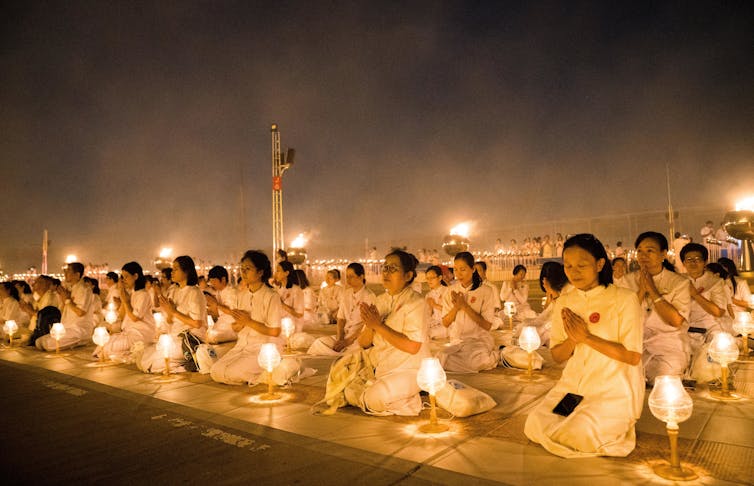
The Abrahamic traditions of Judaism, Christianity and Islam view a day of rest each week as a sacred right and responsibility of believers. The traditional Jewish Shabbat offers a 24-hour period beginning at sundown on Friday when the busyness of everyday life halts. Participants gather to worship, share a meal, study and pray.
Similarly, practicing Muslims celebrate their holy day on Fridays. This is a time when Muslims step away from work to attend a midday jumah, a prayer service at a local mosque, where imams offer sermons on a range of intellectual, spiritual and practical topics and lead congregations in prayer.
Although attendance numbers are declining, many Christians observe the holy Sabbath on Sundays through church attendance, communal worship, music and the sharing of the Eucharist, when Christians consecrate and consume bread and wine representing the body and blood of Jesus Christ. The Christian Sabbath represents a time to rest, pray, worship and spend time with family.
Branches of Islam, Christianity and Judaism additionally call for regular times of prayer and contemplation as part of daily and yearly cycles. In the Islamic tradition, stopping to pray throughout the day represents one of Islam’s five pillars of faith.
Through the practice of meditation, religious traditions quiet the senses in order to achieve a mindset of rest that they believe brings about heightened consciousness. Hindus, Buddhists and Jains teach the concept of dhyana, which generally translates to “contemplation.”
Through yoga, meditation and other contemplative practices, practitioners can achieve a state of meditative consciousness and self-awareness that can lead to better mental, physical and spiritual health.
Quieting the mind
Religions emphasize the need for rest and quiet reflection so our over-cluttered minds can focus on prayer and other contemplative practices. The Apostle Paul discusses how cultivating the “fruit of the spirit” through prayer and contemplation moves us toward patience and away from egocentrism.
Buddhists believe that quieting the mind through meditation can help people recognize that their feelings, perceptions, worldviews and even the self are impermanent features of life that can cause suffering. It can also help people contemplate their connectedness to the world around them.
Rest and contemplation help connect religious people with the deeper sources of meaning they seek to cultivate through scriptural study, meditation and prayer. As the American Trappist monk Thomas Merton explains in his 1948 autobiographical book “The Seven Story Mountain,” contemplation is a time of rest, the suspension of activity and a “withdrawal into the mysterious interior solitude in which the soul is absorbed in the immense and fruitful silence of God.”
Health benefits of rest and meditation
Medical science has become religion’s unexpected partner in confirming the benefits generated by these religious practices.
Researchers have found an association between downtime, learning and creativity. Sleep, nature walks and exercise offer a number of life-enhancing benefits, including improved memory, productivity and physical health. Recent advances in neuroimaging technologies have allowed researchers to observe brain changes during times of intense prayer, yoga and mindfulness meditation. Scientific evidence suggests that engaging in these practices may lead to improved health and well-being.
A broad range of clinical studies on mindfulness, decentering and acceptance therapies note that regular meditation can physically alter the brain and how it responds to the world. For instance, these practices have been found to transform the brain’s neural pathways and create new neurological networks that can lead to improved health and well-being.
Research on the practices of Japanese and Chinese Buddhist monks reveals benefits for physical and mental health. Furthermore, active meditations, such as yoga, qigong and tai-chi, are found to increase a sense of well-being through the regulation of mood and the reduction in anxiety and depression.
Even in the midst of a pandemic – or a stressful work week – taking time to rest, exercise, sleep, meditate or pray can lead to improvements in our everyday physical, mental and spiritual health.
Like a few i have talked with in the past year, I suspect that I may had had the Corona Virus in late dec 2019 / early Jan 2020. I suffered a Flu like ailment that peaked with the main symptom of Covid, Shortness of breath. I couldnt walk 4 feet without being out of breath.
I was fortunate though, this symptom started to subside with about 4 days but it seemed like it took me many months to feel close to back to normal. To this day I am unsure if I had Covid-19 or a severe Pneumonia like infection, though I had others around me in my family whom also suffered the same problems in the same date range.
During the early months of the pandemic I did not seem to feel much emotional / mental anxiety or panic. But as the months passed I did start getting overwhelmed by both the News media hyping it up and the politicization of the pandemic itself.
I found myself glued to one news channel or another like most people, looking for some hope of it coming to an end and some unity in the congress to get things rolling towards getting the pandemic and its many problems it caused in our economy and society.
Between the Battle over mask wearing, lock downs on public gatherings and the unfortunate problems of our society being amplified during the pandemic, I was finding very hard to find any peace or tranquility within my own mind.
Fear of infection, loss of hope and the political madness that was gripping our nation both in the public and in the government itself was getting to the point I was losing most of my ability to think rationally.
Eventually I chose to turn off the TV, stop watching the news for a while. That gave me time to refocus and think about things rationally and logically. That choice of ending the binge watching of the news lead to me returning to my normal self mentally and emotionally.
This pandemic panic was short lived mind you, not even a month in time but i do believe it could have and probably would have lasted longer if I continued being glued to the tv watching news channels.
The pandemic has brought to light and caused a magnification of many social injustices along with amplifying the polarization of a already dysfunctional government.
Civil Rights, Civil Justice and equality has been in need of being addressed not only in the United States, but in most if not all of the world. A person should never be judged by religion, color, nationality , Financial status, sexual preference or even their political party.
Democracy or in our case a Democratic Republic is not a failed experiment like some world government leaders has stated, It is a on going ever changing and growing thing. Change is always hard and usualy is feared by most people, reason why there is always polarization and opposition when change comes.
Right now our congress is playing the partisan games, both sides doing what they need to to gain votes more so than to do what it right. The congress seems dysfunctional and only interested in fighting one another.
One side wants to spend and put the nation in debt, though spending is needed to fix the the nation up with such things as infrastructure. The other side don’t want to spend anything hardly at all and will do anything to stop the former side from succeeding.
Times of trouble always brings out the best and worst in people and governments. This pandemic is no exception to that rule. Being Glued to News is not a good way to deal with the problems at hand and usualy leads to some kind of emotional problems if not brain washing lol. In the end it is what you do during this time that will make the most impact
How you treat others, Resect their opinions and position on topics at hand and if you are a helper or a watcher will determine how we get through this pandemic and troubling times.
Respect, Compassion and doing your part in being a helper in society and not just a bystander who watches will make a positive and large impact on our world and society.
Laughter, the reaction to something funny or an expression of ones happiness. To go out in life and try to make others laugh and smile when they are down is not only noble in my eyes I see it as a sign of a kind and good-hearted spirit. Though life can beat you down, cause you to lose faith in yourself and others the ability to bring smiles and laughter to others still lies within us all. I find when I put forth effort to make others smile and laugh that the weight of my own burdens is lessened and the negative emotions in both me and the other person seems to disappear even if it is just for a short moment of time.
We tend to forget about the feelings and happiness of others around us because we become so consumed with our own troubles and strife. By focusing on making others happy and helping others get through the day we change our focus from just ourselves to both ourselves and those around us. There needs to be a balance of focus, focus on one or the other too much then someone or something becomes neglected.
Laughter is a Band-Aid for the heart and mind, it may not cure-all but it sure takes the sting out of our emotional and mental wounds.












 One Lifetime Blog
You must be logged in to post a comment.